
A report by Bain & Company and HealthQuad identifies remote patient monitoring, OT/ICU optimisation, and chronic disease management as key opportunities for Artificial Intelligence in Indian healthcare. The report highlights a shift from experimental AI to real-world applications, driven by government initiatives, increasing EMR adoption, and a robust startup ecosystem. AI's autonomous capabilities are rapidly advancing while costs decrease, creating significant growth potential for providers and startups.
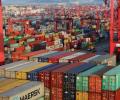
Civil Aviation Minister K Rammohan Naidu announced significant opportunities for Micro, Small, and Medium Enterprises (MSMEs) within India's rapidly expanding aviation sector. With Indian airlines ordering over 1,600 aircraft and the aerospace market projected to double by 2035, there's a massive scope for Indian suppliers to integrate into global aerospace supply chains, moving beyond assembly to design and manufacturing.

Arundhati Bhattacharyya, Salesforce President and CEO for South Asia, highlighted how cloud and AI are democratising capabilities, offering India a unique opportunity to leapfrog in the technology revolution. Speaking at the IMC Chamber of Commerce, she emphasised that AI will create more jobs by addressing unmet business demands and could significantly boost India's GDP, with NITI Aayog estimating a USD 500-600 billion addition by 2035. She urged Indian businesses to transform using technology, focus on data, redesign work, and invest in skills, stressing that AI is not just for large corporations.

'I didn't know whether I simply loved acting, whether I was good at it or whether I wanted to pursue it professionally. So, about 10 years ago, I started auditioning just to see how far I could go.'

Gaganyaan astronaut Prasanth Balakrishnan Nair stressed the critical importance of AI sovereignty for national cybersecurity, citing the increasing difficulty in distinguishing between real and fake content due to AI. Speaking at the Kerala Cyber Suraksha Summit, Nair highlighted that future conflicts and industries would involve a 'whole-of-nation approach,' blurring physical and digital boundaries. He urged greater awareness of digital threats and emphasised India's need to build on its technological capabilities in AI and cybersecurity, drawing parallels with the success of Chandrayaan-3. Other speakers also underscored the rising threat of cyberattacks and the potential for Kerala to contribute to national technology requirements.

Commerce Secretary Rajesh Agarwal highlighted the critical need for India to diversify its services exports beyond the dominant IT/ITeS and professional services sectors. Speaking at the Global Fintech Fest 2026, he emphasised the vast potential in the global financial services market, where India currently holds a small share, and stressed how fintech solutions, like UPI, can drive growth, reduce remittance costs, and support MSME trade finance, ultimately leading to sustainable economic expansion.

As NSRCEL enters its next phase, the incubator plans to focus on AI, deep technology and global partnerships as it looks to expand its reach.

For India, the goal is not simply to host another grand diplomatic gathering. It is to prove that a diverse coalition of emerging powers can still deliver.

IIT Madras is hosting the 3rd Digital India RISC-V (DIR-V) Symposium 2026 in partnership with the Ministry of Electronics and Information Technology and RISC-V International. The symposium aims to unite stakeholders from government, industry, and academia to advance India's semiconductor innovation, focusing on indigenous processor technologies, secure computing, hardware innovation, and AI, aligning with the government's vision for India as a global semiconductor hub.
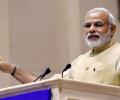
Prime Minister Narendra Modi, in his Independence Day address, highlighted technology and innovation as central to India's goal of becoming a developed nation by 2047. He called for India to lead in emerging technologies like AI, quantum computing, and space, announcing a massive AI skilling initiative for one crore youth. Modi stressed the importance of becoming a global innovation hub, bolstering energy security with nuclear power, and strengthening cybersecurity.
BRICS leaders, in their New Delhi Declaration 2026, have called for wider access to Artificial Intelligence resources and stronger international cooperation to ensure the technology is safe, secure, inclusive, and reliable. The declaration outlines a broad technology agenda covering AI, cybersecurity, digital public infrastructure, telecom, quantum technologies, and advanced manufacturing, committing to implement the grouping's statement on 'Global Governance of Artificial Intelligence'.
Arunachal Pradesh Chief Minister Pema Khandu lauded the state's first 10-day artificial intelligence boot camp and hackathon at IIT-Guwahati. The programme aims to build AI skills, promote innovation, and create a future-ready digital workforce, offering hands-on training in AI/ML, Python, and NLP to 40 young participants.
The Central Industrial Security Force (CISF) has signed an MoU with the Drone Federation of India (DFI) to enhance its counter-drone capabilities. This partnership aims to strengthen security at vital installations like airports, nuclear facilities, and oil refineries by fostering engagement with Indian drone startups and technology companies for capacity building, research, and operational readiness against aerial threats.

'You can't be selfish when you're thinking about nature. It has to be good karma.' 'If we prevent textile waste from going to the landfills, it's good karma.'

'It's A Cat And Mouse Game.'

When it comes to raising funds, women entrepreneurs receive a disproportionately small share.

A career break does not erase the experience that came before it. But the labour market can act as though it does. The more women invest in building professional careers, the more costly an interruption can become. How, then, do we enable women to make a comeback? Whose responsibility is it? asks Radha Roy Biswas.

New Delhi was told it had given something up; in reality it had stopped talking about it, notes Dr Abhishek Puri.

Prime Minister Narendra Modi cautioned against the 'weaponisation' of technology and critical minerals at the BRICS summit, advocating for cooperation to foster shared prosperity. Concurrently, Chinese President Xi Jinping announced plans for an open-source AI ecosystem for BRICS nations, positioning Beijing as a key technology partner amid global AI competition.

Competition Commission of India (CCI) chairperson Ravneet Kaur has warned that the rapid adoption of artificial intelligence (AI) could intensify anti-competitive practices in digital markets, including self-preferencing, discriminatory pricing, and market manipulation. She highlighted the CCI's ongoing study into AI's impact on competition and stressed the regulator's role in fostering growth while preventing abuse of dominance.

Karnataka Chief Minister D K Shivakumar announced the establishment of India's first government-driven Artificial Intelligence University and an AI Hub in Bengaluru. This initiative aims to position Karnataka as a global leader in responsible AI innovation, fostering talent, research, and collaboration. The state seeks to become an AI-native state, leveraging AI to improve governance and daily life across various sectors.

rediffGURU Vishal Bisht, founder and CEO of IT services provider Marksman Technologies, recommends strategies to build a successful brand.
Astrobase Space Technologies, a Bengaluru-based startup, has unveiled 'EVEREST', India's first privately built full-flow staged combustion (FFSC) LOX-Methane rocket engine. This advanced engine, designed for reusable medium-lift launch vehicles, aims to enhance India's position in the global space economy by providing high-performance propulsion systems for future satellite deployments.

Trai Chairman Anil Kumar Lahoti highlighted the transformative role of satellite communications in expanding seamless connectivity across India, especially in remote areas. He noted that India's space economy is projected to grow significantly, driven by satcom technology that will bridge the digital divide, provide resilient infrastructure during disasters, and support strategic sectors.
Trai Chairman Anil Kumar Lahoti highlighted the transformative role of satellite communications in expanding seamless connectivity across India, especially in remote areas. He noted that India's space economy is projected to grow significantly, driven by satcom technology that will bridge the digital divide, provide resilient infrastructure during disasters, and support strategic sectors.

Accel and Google's AI Futures Fund have announced the five startups selected for the 2026 Atoms AI Cohort, focusing on enterprise, voice, and industrial AI solutions, with each startup receiving significant investment and resources.

'The Indian private space sector is no longer a high-risk bet; it is a highly bankable, globally competitive asset class capable of easing the global small satellite launch bottleneck.'

From the launch of the 'Startup India' initiative in 2016, to the abolition of angel tax and easing of reverse flipping norms, the startup ecosystem is evolving.
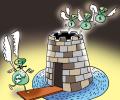
India's outward foreign direct investment (FDI) plummeted by 47.9 per cent year-on-year to $3 billion in June 2026, according to the Reserve Bank of India (RBI), with declines across equity, debt, and guarantee commitments.

Maruti Suzuki India is strategically investing in the premium hatchback segment, launching a refreshed Baleno with advanced driver assistance systems (ADAS) to capture a significant share of the evolving Indian passenger vehicle market, even as SUVs continue their dominance.
The technology startup ecosystem in India attracted $7.2 billion in funding during the first half of calendar year 2026, marking a 12 per cent year-on-year (Y-o-Y) increase. However, even as funding increased, deal count fell sharply, according to a report by market intelligence platform Tracxn.

'An instruction came from somebody in Delhi saying, "don't go with the launch".'

The aim is to win over the country's enterprises, developers and startups as AI systems shift from answering questions to autonomously executing tasks.

For Aniket Dhar and Rupankar Bhattacharjee, the goal is simple: turn a persistent environmental challenge into a sustainable solution that benefits both nature and people.

The physical centres will operate on a monthly subscription model, where access would be limited to verified active gig workers and platform verification.
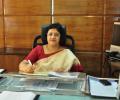
Arundhati Bhattacharya, Salesforce President and CEO for South Asia, stated that cloud and AI are democratising capabilities, offering India a unique opportunity to leapfrog in technology. Speaking at the IMC Chamber of Commerce, she emphasised that AI will create more jobs and urged Indian businesses to transform using technology, rather than merely digitising. She also highlighted the significant economic potential of AI adoption for India.

RBI Governor Sanjay Malhotra stated that the central bank consistently views fintechs as 'valuable partners' in shaping India's future financial system, crediting the sector with expanding financial inclusion, enhancing customer experience, and streamlining credit delivery, particularly for MSMEs.

Tata Elxsi has partnered with Sarla Aviation to develop the Shunya air taxi platform. Tata Elxsi will provide engineering support for avionics, software integration, and certification, while Sarla Aviation will lead the design and type certification of the electric vertical take-off and landing (VTOL) aircraft.
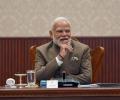
Prime Minister Narendra Modi convened a roundtable with AI startup CEOs and held bilateral meetings with global leaders at the India AI Impact Summit, focusing on AI's potential across sectors and international cooperation.

Azim Premji's private investment firm, Premji Invest, has quietly built a formidable portfolio of 11 AI startups, primarily in the US, with a combined valuation of $43 billion. The firm has participated in 19 funding rounds since 2021, with a notable focus on US-based companies, many of which were founded by Indian entrepreneurs.
